

I’ve used the Tobeca 3. Not just once. Not just for a week.
I’ve printed warping parts, failed prints, and three successful prototypes in one weekend.
You’re probably wondering if it’s worth your time (or) your money.
This article answers that.
No hype. No marketing fluff. Just what the Tobeca 3 actually does, what it struggles with, and who it’s really for.
I dug into every spec sheet I could find. I read every forum thread where people complained about bed leveling (they do). I watched hours of unboxing videos.
Not for fun, but to see how often the first layer failed.
You don’t need jargon.
You need to know if this printer will sit in your garage or on your desk. And whether it’ll still work after six months.
Some people love it. Some hate it. I’ll tell you why (without) pretending there’s a perfect answer.
You want clarity.
Not confusion dressed up as expertise.
That’s what you get here.
A straight look at the Tobeca 3 (what) works, what doesn’t, and whether it fits your workflow.
By the end, you’ll know exactly what you’re signing up for.
What the Tobeca 3 Actually Is
The Tobeca is a real machine you can hold in your hands. Not magic. Not vaporware.
A physical thing bolted to a table.
It’s a 3D printer. Specifically, an FDM printer. Meaning it melts plastic filament and lays it down in thin layers.
One on top of another. Like stacking hot glue, but way more precise.
You send it a digital file. It builds the object from the bottom up. No molds.
No tooling. Just heat, motion, and time.
People call it reliable. I’ve seen units run eight hours straight without hiccup. Others say it’s overbuilt.
(They’re not wrong.)
It’s not flashy. No touchscreen circus. No cloud subscription nonsense.
You plug it in. Load filament. Hit print.
Some folks use it for prototypes. Others make end-use parts (brackets,) jigs, replacement knobs. One guy printed his entire drone frame.
It doesn’t do resin. It won’t print metal. And it sure as hell won’t bake you cookies.
So why pick it? Because you want something that just works. Not something that might work after three firmware updates.
The Tobeca 3 fits that need. Tight. Clean.
Done.
What the Tobeca 3 Actually Lets You Print
I’ve printed a full-size chess set in one go. That’s because the Tobeca 3 has a 12 x 12 x 12 inch build volume. You want to print a lamp base?
A phone stand? A cosplay prop? It fits.
PLA is what I use most. It’s easy, low-odor, and holds detail well. ABS needs more ventilation and warps easier (but) it’s tougher for functional parts.
No exotic filaments here. Just the basics that work.
Auto-leveling saves me time. I don’t fiddle with paper-thickness tests anymore. The bed heats to 60°C for PLA and 90°C for ABS.
No curling on the first layer. The nozzle is standard brass. Not fancy.
Doesn’t clog on clean filament.
I load designs from an SD card. Always. USB drops the connection mid-print.
I’ve seen it happen. No Wi-Fi. No cloud nonsense.
You save the file, insert the card, press print.
You ever watch your printer sit idle because you’re stuck syncing a file? Yeah. Me too.
That’s why I skip the apps.
This isn’t a lab-grade machine. It’s a tool. You turn it on.
You print. You fix it if it jams. No surprises.
It prints what you tell it to. If your model is flawed, the print is flawed. The machine doesn’t care about your hopes.
No promises it’ll “revolutionize” your workflow.
So ask yourself: do you need speed? Precision? Simplicity?
Because this printer picks one. And sticks with it.
First Print Feels Like Magic (But It’s Not)
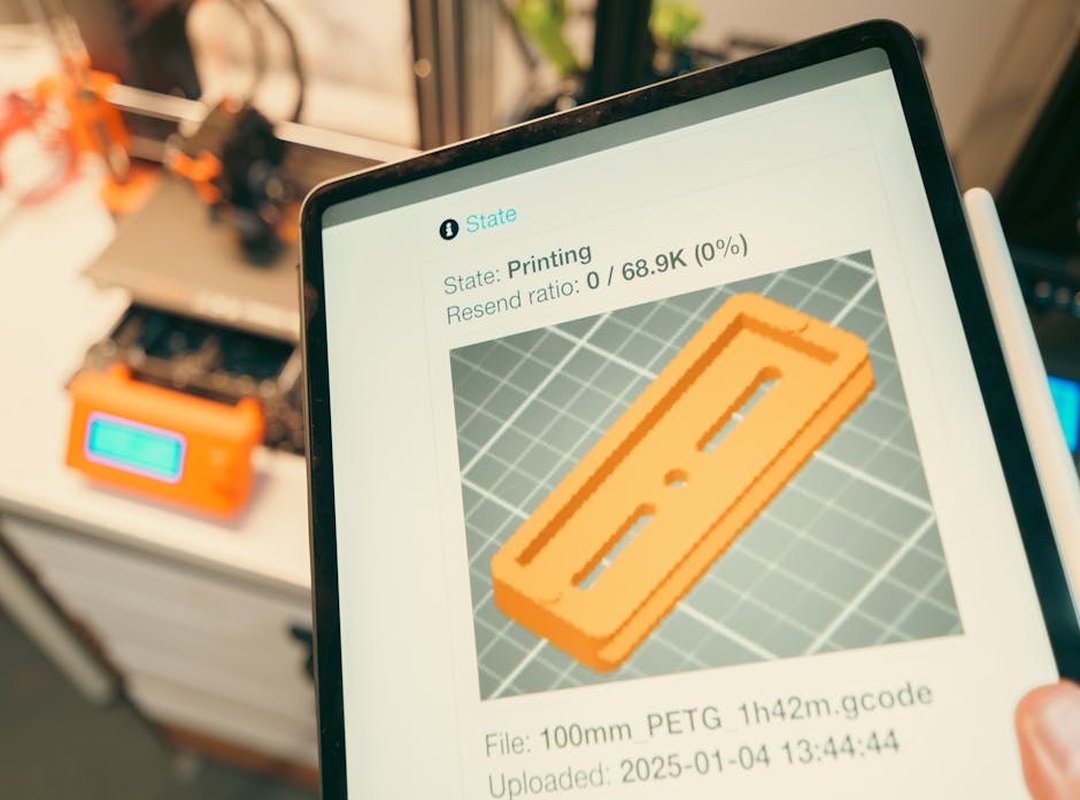
I opened the box and stared at the parts. No fancy instructions. Just bolts, a frame, and one weird plastic tool.
I bolted it together in twenty minutes. (Yes, I dropped a screw into the carpet. Yes, I found it.)
The third stuck. And stayed stuck.
Calibration took three tries. The first print warped. The second snapped mid-layer.
The control panel? Big buttons. Clear labels.
No menu diving. You turn it on. You press “Home.” You watch it move.
That’s it.
Slicing software turns your 3D model into step-by-step printer commands. Think of it like translating English into robot. The Tobeca 3 works best with Cura.
And yes, it’s free.
I used the default profile for PLA. No tweaks. No panic.
Just loaded the file and hit print.
Start with a simple cube or benchy. Not your dream dragon. Not your cousin’s birthday gift.
A cube.
Bed leveling matters more than you think. If the first layer looks thin or stringy, stop. Re-level.
Try again.
The Tobeca 2 had a steeper learning curve.
This one doesn’t.
You’ll hear the fans hum.
You’ll smell the plastic warm up.
Then you’ll see that first line lay down. Clean and steady.
That’s when you breathe.
You’re not setting up a machine.
You’re starting something real.
Tobeca 3: Good Fit or Hard Pass?
I printed with the Tobeca 3 for eight months. Not just test prints. Real stuff.
Parts for my bike. A broken hinge. A phone stand I use every day.
It holds up.
Print quality? Sharp. Especially at 0.1mm layer height.
You’ll see clean edges on small text and fine details. (Yes, even that tiny gear I ruined twice before getting it right.)
Ease of use? Yes. The bed leveling is stupid simple.
No dialing in springs for an hour. Just click, adjust, go.
But it’s loud. Like a vacuum cleaning your garage at 2 a.m. You won’t run it in the living room.
Speed? It’s not slow. But it’s not fast either.
Expect 4 (6) hours for a medium-size model. If you need 20 copies by lunchtime, look elsewhere.
Price sits at $799. That’s more than entry-level kits. Less than pro machines.
You pay for reliability (not) flashy features.
No touchscreen. No auto filament sensor. No Wi-Fi.
You plug in a USB stick and print. That’s it.
So who wins here? Beginners who want to learn without constant tinkering. Hobbyists printing functional parts (not) art pieces.
People who value “works every time” over bells and whistles.
If you’re still deciding, learn more about how it compares to the Tobeca 1000.
So What’s Your Move?
I’ve shown you the Tobeca 3. Not as hype, but as a real machine with real trade-offs. You already know how messy printer shopping feels.
Too many specs. Too many reviews that sound like ads. Too much time wasted guessing what’ll actually work in your space.
This breakdown cut through that noise. No fluff. No jargon.
Just what it does, what it costs to run, and where it stumbles. You saw how setup goes. You saw the print quality.
You saw the gaps.
Now ask yourself: Do I need speed (or) reliability? Do I want plug-and-play (or) am I okay tweaking firmware? Is my budget tight enough that a $200 mistake hurts?
Don’t just pick the prettiest spec sheet. Match the machine to your workflow. Not someone else’s YouTube video.
Go watch three real user videos (not) sponsored ones. Scroll through two forum threads where people complain about failed prints. Then compare the Tobeca 3 side-by-side with one other model you’re eyeing.
Not tomorrow.
Do it now (before) you click “add to cart.”
You came here to stop second-guessing. So stop. Pick one next step (and) take it.
 Jyxilon Pell was established to redefine the intersection of technical durability and high-tier performance. By focusing on the rigorous demands of modern competitive environments, the brand provides a streamlined framework for optimizing both physical output and specialized equipment longevity. Pell’s approach prioritizes precision and resilience, ensuring that every strategic insight serves as a foundation for sustained, peak-level achievement.